Inflation has dominated headlines, impacting the financial industry, from members’ rising household expenses to our own costs at the pump. Inflation acts as a tax on the economy, but credit unions are particularly exposed due to our focus on underserved communities, part of the nobility of our movement. While a strained consumer has already pressured balance sheets through weaker loan demand and rising delinquencies and bankruptcies, additional risks remain underappreciated by many C-suites.
A look at inflation beyond the headline
The Producer Price Index (PPI) is a leading indicator of the Consumer Price Index (CPI), which reflects prices consumers face and helps gauge price momentum on Main Street. As these indices rise, costs increase, what we call inflation. Because PPI measures producer costs, it offers insight into future consumer prices, as those costs are often passed through. 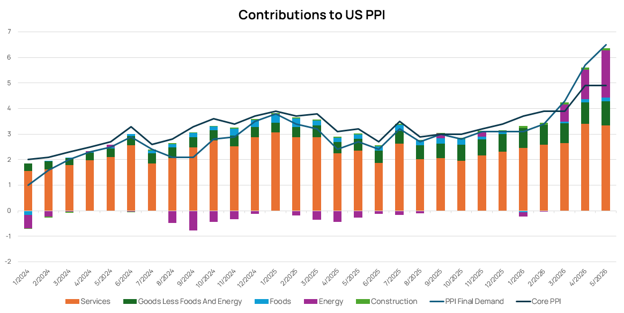
A deeper look at PPI shows two primary, closely linked drivers of current inflation: Energy and Services.
The conflict in the Middle East has driven energy inflation, with WTI crude peaking at $119.48/bbl and Brent at $126.41/bbl during peak volatility. Although prices have eased, sustained relief remains uncertain. Higher energy costs tend to bleed into services, as nearly all services require energy. Transportation sectors, Airlines, Freight, Rail, all pass increased costs through the supply chain. As restaurants, hospitals, hotels and data centers absorb higher input costs, consumers ultimately bear the burden, reinforcing this “bleed-through” effect.
A key silver lining is that energy is one of the few inflation components that can turn deflationary, periodically falling below a 0% baseline. If energy weakens, prices may not just stabilize, they could decline below prior levels, potentially even below pre-conflict levels. Deflation is a rare trait shared only with food. Energy remains the most volatile component, both upward and downward.
How do central banks respond to market stress?
Central banks have a powerful but limited toolkit to meet their dual mandate: controlling inflation and supporting employment. At their core, they influence the supply of money, experienced as lower or higher interest rates. When inflation is low and labor is weak, policymakers typically loosen the money supply and lower rates to stimulate economic activity. Conversely, when inflation is high and labor is strong, they tighten the money supply by raising rates to forcibly suppress demand and cool down the economy.
The challenge arises when labor weakens while inflation persists. Actions taken to address one problem can worsen the other, making the dual mandate difficult to balance. Missteps by central banks, whether the Fed, ECB, or BOJ, can lead to runaway inflation, employment shocks, or stagflation (combining the worst elements of both).
Given the Fed’s dual mandate, where do we stand currently? 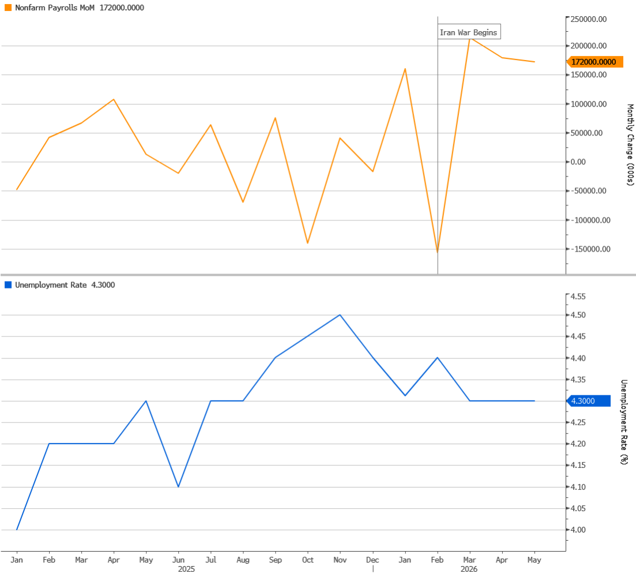
Non-farm payrolls have increased since the conflict began and unemployment has remained largely unresponsive to geopolitical stress, highlighting the resilience of the U.S. labor market. 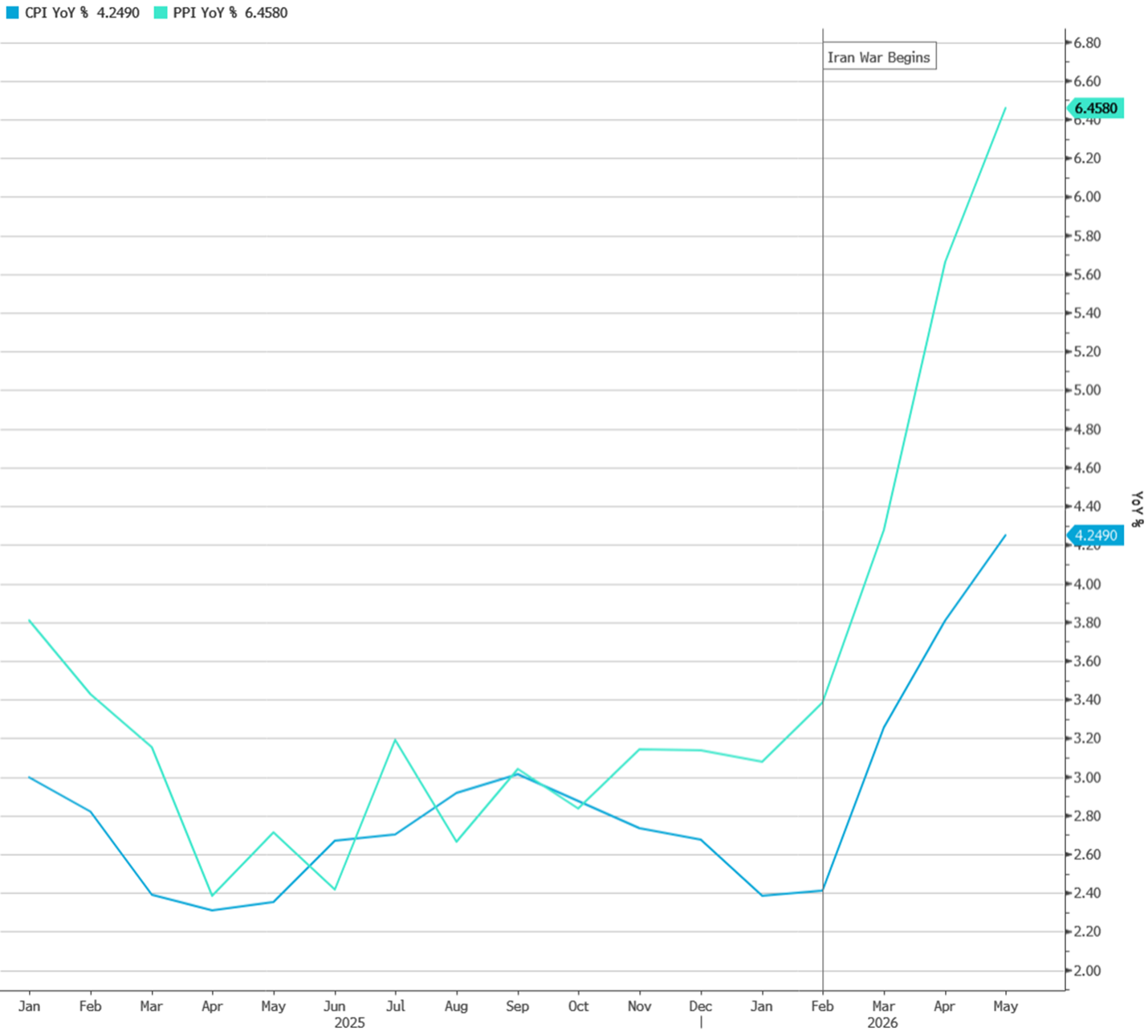
Inflation, however, tells a different story. Both CPI and PPI have risen significantly over the same period. Historically, strong labor combined with high inflation leads central banks to hike rates. Accordingly, major financial institutions have shifted expectations, from anticipating 50 basis points of cuts earlier this year to now forecasting two 25 basis-point hikes.
That represents a complete reversal requiring credit unions to adapt.
If rates rise, how would that impact your credit union’s balance sheet?
Higher rates provide benefits, including improved yields on variable-rate loans and new originations. However, they introduce trade-offs. Fixed-rate loans may fall below market rates, slowing cash flows and amortization. Similarly, MBS and CMO investments face extension risk as refinancing declines and prepayments slow. Even fixed-rate securities like Treasuries or Agency bullets classified as available-for-sale may experience mark-to-market losses, potentially forcing institutions to hold to maturity to avoid realizing them.
An Investment Officer’s perspective on navigating these turbulent waters
Liquidity ready for deployment at higher rates is valuable, but idle cash generates minimal yield, underscoring the importance of structure. A well-constructed ladder is critical. Staggered maturities provide consistent cash flow and help manage rate volatility. In rising-rate environments, they enable consistent reinvestment at higher yields while outperforming cash. In falling-rate environments, laddering mitigates reinvestment risk by avoiding full exposure to declining yields. This structure also improves predictability across lending and broader operations.
For credit unions with established ladders, MBS and CMOs can enhance yield. Certain structures help address extension risk. Mandatory Redemption CMOs (GMCs) offer defined maturity dates with guaranteed principal repayment alongside attractive spreads over the interpolated Treasury curve. Additionally, select Freddie K CMBS and DUS CMBS pools function as “bullet alternatives.” Due to underlying mortgage lockout periods, they provide more predictable principal repayment aligned with portfolio maturities.
At Catalyst, we continuously seek out the most credit union-friendly solutions across the market to best serve your organization, your members and the communities you support.
Your Catalyst investment officer is always happy to connect and help identify the “Goldilocks” fit for your portfolio. If you’re evaluating your balance sheet strategy, we’re here to help. Contact us to start the conversation.